Safety & Wellbeing for Women in Fisheries
Women are integral to the fisheries value chain, engaging in fishing, processing, trading, and marketing fish. However, they face significant risks, including Sexual Exploitation, Abuse, and Harassment (SEAH), such as “sex-for-fish” practices, physical violence, economic exclusion, and harassment at landing sites, markets, and transport routes. These challenges are exacerbated by climate change and declining fish stocks, which intensify economic and social pressures, increasing women’s vulnerability.
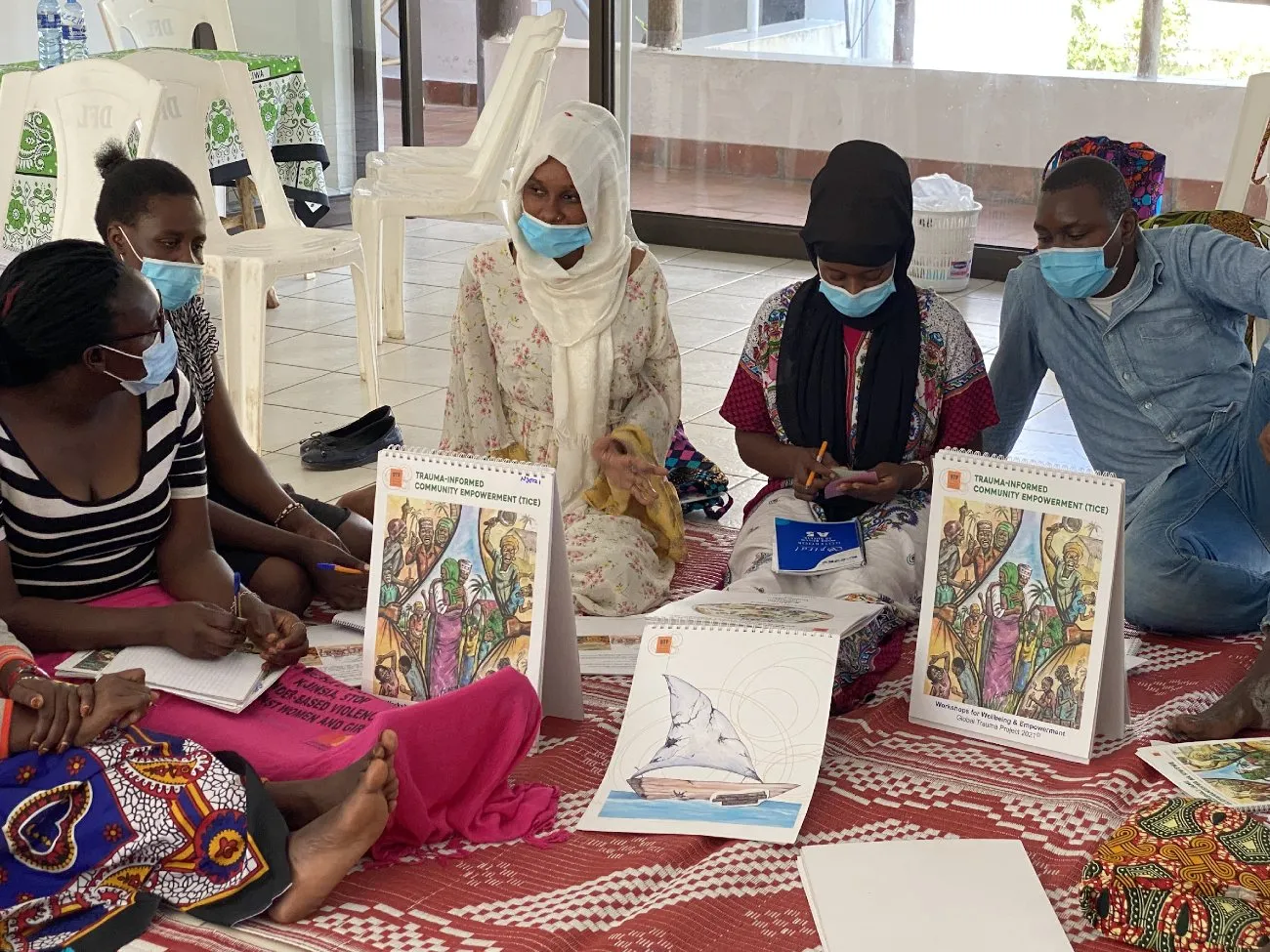
Through the RISE grants challenge, Global Trauma Project (GTP) in partnership with Grassroots Women Rights Centre (GWRC) and Akilimali Associates Organization (ASO) are implementing The Safety & Wellbeing for Women in Fisheries (SWWF) project. This initiative is executed in Lunga Lunga Sub-County, Kwale County, Kenya. The initiative addresses Gender Based Violence (GBV) faced by women in the artisanal fisheries sector, promoting their safety, wellbeing, and resilience while fostering sustainable resource management.
A trauma-informed, survivor-centred approach
The Safety & Wellbeing for Women in Fisheries project adopts a trauma-informed approach by communicating in a way that demonstrates trustworthiness, prioritises safety and empowerment, and commits to social learning and social responsibility.
In addition, it will adopt the survivor-centred approach that respects privacy, believes and validates the experiences of survivors, acknowledges injustices and respects autonomy to prevent, respond to, and mitigate GBV to strengthen women’s safety, resilience, and leadership in the artisanal fisheries sector.
Project goals
Strengthen systems for GBV mitigation
- Conduct gender analysis and safety assessments to identify GBV risks.
- Develop and implement community safety plans to reduce vulnerabilities.
Improve GBV response mechanisms
- Establish safe spaces for group-based trauma healing sessions to support survivors and women-at-risk of GBV in the fisheries sector
- Strengthen referral pathways to ensure survivors and women at risk of GBV access timely and appropriate services.
Prevent GBV and promote inclusive governance
- Engage men and boys to challenge harmful gender norms and foster positive masculinity
- Strengthen the economic resilience of women in artisanal fisheries by providing climate-smart livelihoods training, financial literacy, access to microfinance, and market linkages
- Promote women’s leadership in fisheries management by collaborating with Beach Management Units (BMUs) and community champions.
Implementation and support
The RISE grant Challenge project is implemented by Global Trauma Project (GTP), Grassroots Women Rights Centre (GWRC) and Akilimali Associates Organization (ASO).
The RISE grants challenge is managed by IUCN and supported by Norad.
Contact information
- Organisation
- Global Trauma Project
- [email protected]
- Tel No.
- +254723140609
- Website
- globaltraumaproject.org
Disclaimer: This project is implemented by GTP, GWRC, and ASO under the RISE grants challenge, managed by IUCN. The contents are the sole responsibility of the implementers and do not reflect the views of IUCN or the Government of Norway.
RISE: Safety & Wellbeing for Women in Fisheries
The original two-page project brief (PDF).