Introduction
Global Trauma Project (GTP) supports local leaders to implement community-driven health and wellbeing initiatives. As a Radical Partner within Albany State University’s Stronger Together grant, GTP is committed to creating a network of trauma-informed Wellness Mentors for expectant and parenting teens, ages 15–19 years old. This report highlights the background, activities, analysis, and recommendations of GTP’s progress from March through June 2021.
GTP works with communities around the world to build resilience and reduce the impacts of compounded stress/complex trauma by training and mentoring trusted community members to facilitate trauma-informed programming in a manner that is accessible, culturally-relevant, and proven to show significant impact. GTP developed a proven model to promote individual and community wellness. We continue to evolve the Trauma-Informed Change Making (TICM) model and the Trauma-Informed Community Empowerment (TICE) Framework, allowing for fidelity to effective mental health supports and flexibility to local contexts.
An innovative network of trauma-informed Wellness Mentors will support the psychosocial, emotional, and educational needs of expectant and parenting teens and families impacted by stress, crisis, and adversity.
Trauma-Informed Change Making (TICM) model
Trauma-Informed Change Making is GTP’s capacity-strengthening model to build systems for localized Mental Health and PsychoSocial Supports (MHPSS). TICM strives for community ownership ensuring that solutions are appropriate, empowering, and sustainable. Therefore, the first, yet often most time-consuming, step is to strengthen local networks who will lead the initiative in a committed, transparent, and collaborative manner. Having the “right” people in the “right” roles is a crucial of GTP’s Intentional Design process. As technical consultants, GTP can advise on how to identify appropriate people, strategize best practices, and problem solve to overcome challenges. For sustainability, there must be a local network committed to owning, designing, implementing, ideally evaluating, and carrying forward initiatives. Our priority is on forming longer-term partnerships with a commitment to strengthening sustainable and culturally relevant trauma-informed support systems.
Trauma-Informed Community Empowerment (TICE) Framework
Trauma-Informed Community Empowerment (TICE) is GTP’s foundational framework used to strengthen the capacity of community providers to:
- Prevent further adverse experiences
- Reduce the impacts of trauma and compounded stress
- Build resilience within individuals and communities
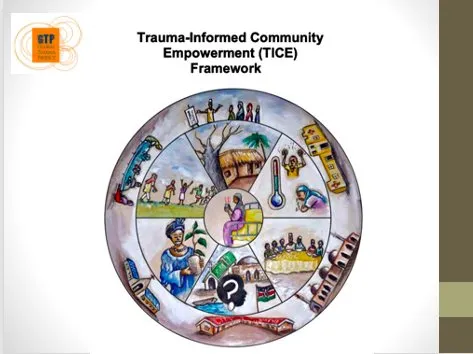
TICE was designed for working with communities impacted by trauma, stress, or other forms of adversity, and where effective mental health supports are underutilized or lacking. Two pillars of TICE are fidelity and flexibility. While the framework remains consistent, TICE is contextualized to specific cultures/environments to ensure that the concepts are relevant and can be deeply internalized and utilized by local providers. This ensures providers are able to craft effective local responses based on their specific needs, contexts and capacity.
The framework is comprised of 6 Core Components that are most affected by trauma:
- 1Safety
- 2Regulation
- 3Connection
- 4Identity
- 5Empowerment
- 6Joy
In addition to these 6 Core Components, TICE focuses on the aspect of “Self-Care” as a central principle within the framework. This means that the 6 Core Components must be applied and utilized within ourselves, before we can work to support healing within our communities. We ground this within Community Care, as an individual affects and deserves the support of the community, and visa verse.
The TICE Framework addresses the impacts of trauma, while taking steps to avoid re-traumatization. TICE principles can be integrated into multiple thematic areas including, but not limited to, Youth Development, Reproductive Health, Parenting, Leadership, Violence Prevention, Education, Peace-Building/Conflict Transformation, Livelihood/Economic Development, and Health.
Global Trauma Project’s learning agenda
What impact will a network of local, trauma-informed wellness mentors have on teenage health and wellbeing, specifically teenage pregnancy?
- AWhat role does mental/emotional well-being play in impacting pregnant and parenting teens?
- BHow does the application of the TICE Framework strengthen community wellbeing initiatives targeting Pregnant and Parenting Teens?
- CWhat training and mentoring do local providers need to effectively implement mental health-focused, safe spaces for Pregnant & Parenting Teens?
- DDo PPTs benefit from TICE safe spaces? In what ways?
- EWhat impacts does the TICE initiative have on pregnant and parenting teens in regards to: mental/emotional wellbeing, prosocial functioning, health behaviors, resilience, coping skills, identity/sense of self?
Safe spaces
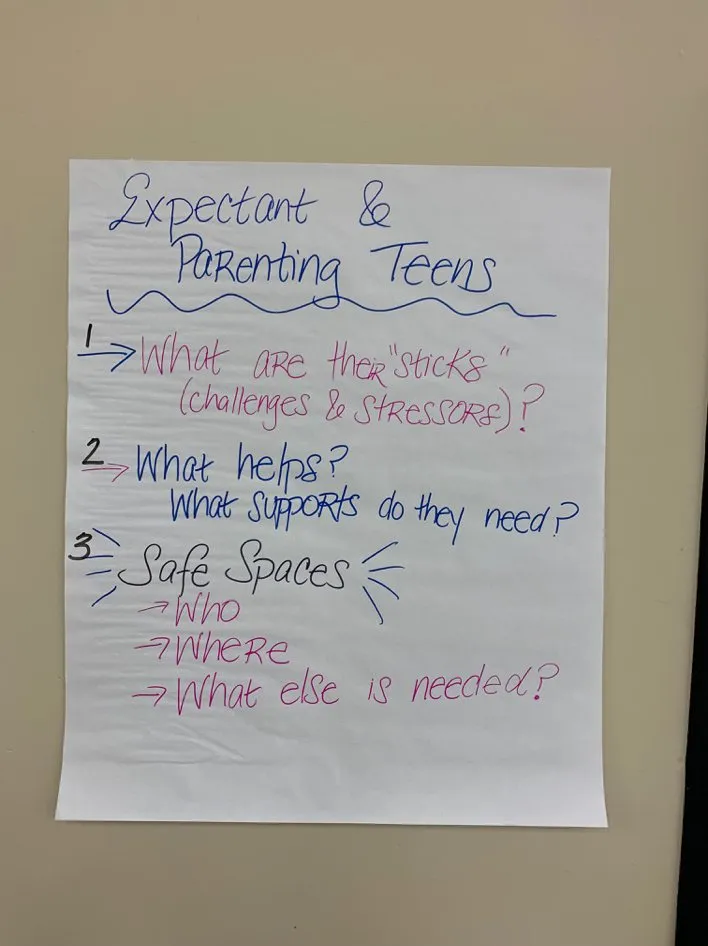
In Year 1, GTP’s goal is to train and mentor a core group of local change makers. Both Community Champions (selected from Planning Council) and Wellness Mentors (near peers) will be able to identify how mental health and stress are impacting the lives of Pregnant and Parenting teens (PPTs), ages 15–19 in the selected communities. By utilizing the Trauma-Informed Community Empowerment (TICE) Framework, a foundation will be built for community leaders to create a network of support, communicate in unified language, complement services, and lay out the implementation plan for Safe Spaces through which to conduct community workshops.
The term “Safe Space” is used to describe an environment (physical or virtual) in which Pregnant & Parenting Teens (PPTs) are free from harm, discrimination, and violence, and are supported to feel safe, secure, confident, and connected. Safe spaces support expectant and parenting teens by providing opportunities for improving mental health, strengthening community connections, increasing empathy among diverse groups, and placing youth in the forefront as change-makers and leaders for adolescent wellbeing. By working through community partnerships, and focusing on capacity-building, GTP focuses on increasing local ownership of adolescent health efforts and strengthening social networks.
Project activities
By centering innovation, it was known that activities, timeline, and terminology would evolve in response to community feedback and determined best practices.
Year 1: March through June 2021
- 1
Consultative meetings
With ASU and key stakeholders for best program design (strategic integration), implementation strategy (including selection of participants), cultural considerations for curriculum case studies. Meetings included those with:
- aST Staff/Partner Meetings
- bOffice of Population Affairs (OPA) Meeting March 26
- cOPA Trauma-Informed Care Webinars May 6, 13, & 20
- dTechnical Consultants, including Population Council
- eCommunity Leaders
- 2
Contextualization of TICE Framework
Initial curriculum design
- 3
Training for Planning Councils*
“Creating a Network of Community Support for Expectant and Parenting Teens, ages 15–19”
Purpose: Initiation to Stronger Together initiative, initiate planning councils, identify key themes, project strategy and next steps.
Suggested Criteria for Participants (*as GTP did not directly recruit participants, we are unsure of structure of Planning Council, and whether meeting attendees considered themselves members of such):
- Live or work in SWGA
- Are respected and trusted with sensitive/taboo information
- Are able to work in an empathetic, respectful, and inclusive manner
- Have a deep understanding of the local context in relation to adolescent health and teenage pregnancy
- Have regular, positive contact with teens ages 15–19, including those that are expectant and parenting
- Are committed to increasing resilience and reducing negative impacts of stress, trauma, and adversity
Participants learned about:
- Global Trauma Project’s role within Stronger Together
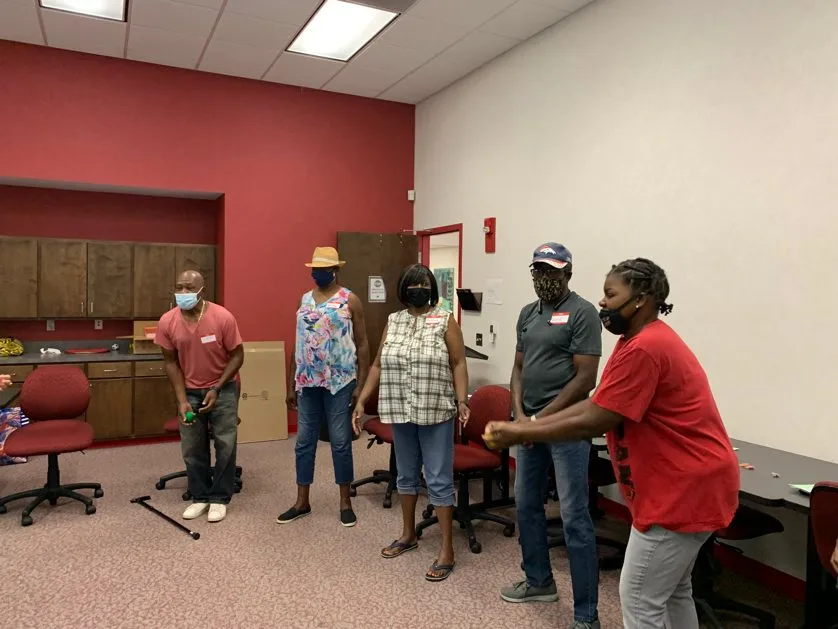
- How stress and trauma impact our ability to learn, lead, and relate
- Tools to manage stress, increase resilience, and celebrate joy
- Trauma-Informed Community Empowerment (TICE) Framework
- Strengthening networks of support through Wellness Mentors
Trainings held
- aJune 25 – Sumter County
- bJune 26 – Randolph County
- cJune 29 – Dougherty County (Providers)
Analysis
Relevance of TICE Framework
Themes of stress, crisis, and adversity wove through most conversations. GTP uses such topics as segues to more sensitive issues including trauma, Adverse Childhood Experiences (ACEs), and violence. Leaders spoke openly of both the strengths and struggles of their communities. They recognized the relevance of the TICE Framework, and the interplay between the core components, in particular connection and identity. Many concerns were intergenerational, and the desire was for a community-led, sustainable initiative that could address root causes by offering innovative options. They had suffered through many broken promises, particularly from outsiders using short-term funding. Through Training of Wellness Mentors, GTP’s activities are designed to encourage continuation of programming after the official project ends.
“Many programs sound good, but there aren’t enough support or resources to make it sustainable. We have issues with transportation, food insecurity, and poverty.”Community Leader
Relationships are crucial
Community connections are crucial. We were told this ahead of time, and observed it repeatedly during our visit. Community leaders often knew each other for years, working across organizations and locations. While this provides a foundation for community-led work, it could also potentially stall innovation, if those who are used to being in charge are not supportive of alternative models of decision-making, programming, and resource sharing. Our vision is for the Planning Councils to include a critical mass of community leaders, including those outside traditional realms of power. Whose voices are missing? Whose voices needs to be amplified?
The introduction of “new” or even “different” activities and people are best done through trusted community members. As outsiders, not geographically close, GTP is dependent on ST staff and partners for entry into the communities. To fulfill our deliverables, GTP needs appropriate and timely access to, and buy in from, the communities. Given the context of the areas, in-person meetings remain preferable to on-line; though participants also spoke of the power or, and need to be active on, social media.
“Trust is everything.”Community Leader
Community ownership promotes sustainability
The purpose and values of Planning Councils must be explicit. Planning Councils through this initiative must operate to serve the Stronger Initiative. This requires an overview of and commitment to ALL aspects of ST, even if different people and organizations work within distinct realms. Language is very important. GTP took care not to frame ST as “our” initiative, nor GTP as “helpers/saviors.” We do not provide direct service; instead focusing on strengthening the capacity of local leaders. Participants picked up on this viewpoint, and spoke of the need to make solutions “theirs.” It was also noted that organizations are made of individuals, and as empowered individuals, they could spark change.
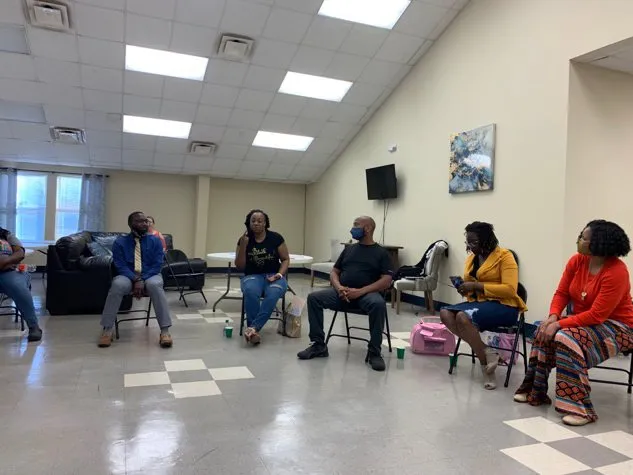
“Why are we talking about the church. We ARE the church.”Community Leader
Participants spoke of the assets already within – or connected to – the community. Leaders are committed to the betterment of their communities. They work hard and long, often without recognition. There have also been many visibly “successful” people (NFL, NBA, musicians) who are from the area. They often move out of the area and feel “there is nothing to come back to.” Some provide giveaways around specific holidays or events. Leaders felt that the ST initiative could give people a tangible, impactful avenue to become involved in their communities. This is true for “successful” people as well as those who would otherwise be labeled a “burden.” Leaders stated that people don’t want to be perceived as a burden, and sometimes do not receive financial or service assistance, even if they qualify, for feel of being labeled such. Avenues to both receive and give back/be an asset to the community are important, particularly for PPTs.
Integrated plan
GTP took the name of the initiative literally. We seek to work in a transparent, collaborative manner with both ST staff and partners. Our intention is to synergize each organization’s strengths to truly become Stronger Together. This requires open communication, clear protocol, clarity around roles, accountability, and values alignment.
Our initial experiences did not include such. There was confusion as to who was to do what in which order. Part of this was to be expected due to the innovative nature of the grant. However, it seemed as if the bureaucracy, competing priorities, internal politics, grant requirements, and lack of integration compounded the chaos. For instance, it was agreed that GTP was to proceed at the same time, in different locations (GTP – Hub 1), with a separate purpose as another partner. Despite this official protocol, we were told that we were to wait while the other partner proceeded and “laid the ground work” for our subsequent activities. While we appreciate the time, energy, activities, and coordination it takes to introduce innovative initiatives, it was impossible to do so properly without clear understanding of the mandate, timeline, and value add of each corresponding partner.
We initiated an integrated plan in March 2021. It was not taken up by others, and we recognized that it was not our role to coordinate the grant. We therefore, though ready to proceed, awaited approval and instructions as to how to move forward. We were mindful of “false progress,” and wanted to ensure that everyone’s time and resources were utilized in the most effective manner towards the actual outcomes of the grant.
We were also informed that we were not to meet with other partners without approval. This mandate hinted at internal politics that once again were stalling progress. The lack of trust within the initiative was also apparent by uncoordinated meetings, cancelled field visits, unwillingness to share information, and, most recently, being asked to sign a Non-Disclosure Agreement.
We acknowledge the extreme stress that the ST team is under, given the many, sometimes conflicting (trauma-informed without mentioning trauma?), intensive grant requirements which are to be coordinated in conjunction with multiple organizations, competing priorities, shortened timeline, and best practices of community work. GTP believes in trauma-informed process, in addition to content, and recommends that an integrated plan would help to lessen the chaos.
Intentional design
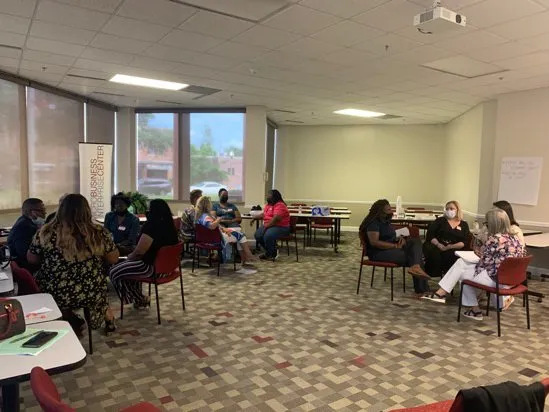
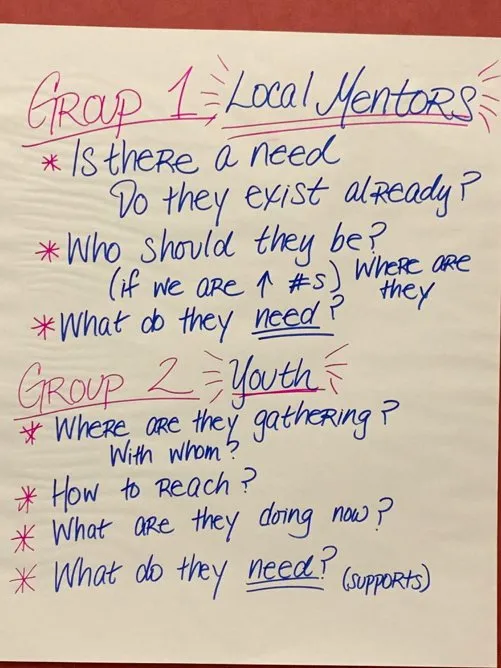
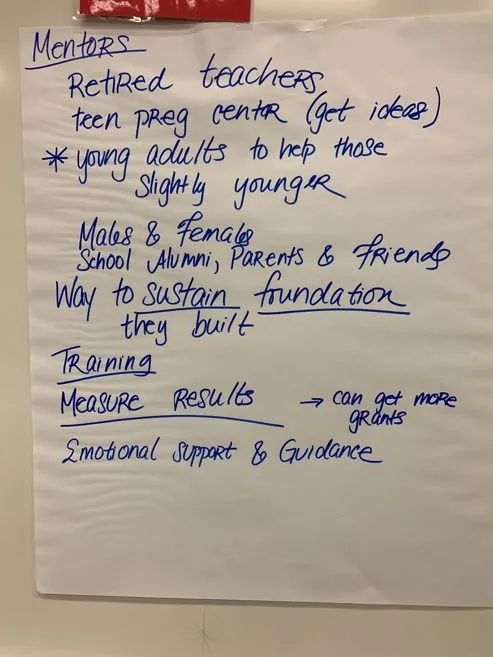
GTP’s activities are centered around Wellness Mentors who provide safe spaces for PPTs. Our intentional design process requires that we systematically assess the assets and challenges within a community, and intentionally craft appropriate responses. It is crucial to identify appropriate hotspots, locations, and Wellness Mentors (# of, and who). Our plan proposed on June 28 included community mapping in August to collect up-to-date information. The number/location of PPTs will impact the location of Safe Spaces and selection of Wellness Mentors. We recommend that safe spaces be offered to PPTs within a walkable distance, and be facilitated by “near peers” – trusted young adults, ideally with lived experiences similar to PPTs. Localization requires a certain # of people from each county, so can work synergistically to recruit enough and appropriate Wellness Mentors. If community mapping is not being done as we initially proposed, ST staff/partners need to determine locations of safe spaces and number of Wellness Mentors in order to recruit for September training.
Prioritize impact over numbers
GTP recommends prioritizing sustainable impact over higher numbers. While “light touch” actions will increase reach, the effect will not be as significant nor sustainable. The proposed plan for Safe Spaces will provide PPTs with “near peer” Wellness Mentors who will lead them through weekly sessions focused on health and wellbeing. By localizing services, utilizing trusted community members, and creating opportunities for connection, PPTs will be supported in a manner that is easily accessible, with tools that they can integrate into their daily lives. The innovation can then be rolled out to other locations as appropriate, eventually broadening the reach. The approach is slower at the start, however, the deeper impact can subsequently expanded.
Counties, instead of hubs
In June, GTP held trainings for Planning Councils in Sumter and Randolph counties, and meet with providers in Randolph county. GTP recommends a geographic focus on those counties, instead of the initially proposed hubs, to localize the initiative. Ideally, Community Champions will collect data to determine exact locations. Using hubs will cast too wide of a net given time and resources. Safe spaces should be within very specific neighborhoods, easily accessible by PPTs. A focus on 3 counties will promote the ability to reach the PPTs where they are. The tradeoff is that initially the reach of “saturated hotspots” will not be as high as a wider, “light touch” approach.
“Who counts?” matters
There has been confusion as to the ultimate beneficiary: is it only currently pregnant and parenting teenagers, aged 15–19; or does it include those who were such; youth who may become pregnant/parenting during that age; support systems (friends, neighbors, community leaders) and/or their caregivers (formal or informal?). GTP’s plan focuses on a network of support FOR pregnant and parenting teens. People reached through GTP activities will initially be adults trusted by PPTs. Direct engagement with PPTs, ages 15–19, will occur through the facilitated safe spaces. Community mapping will help determine how many PPTs are in each community, and subsequently how many safe spaces, and PPTs will be reached.
Evaluation
GTP recommends including thorough evaluation measures to determine success of programming. In collaboration with our research partner, New School for Social Research), with additional contracting GTP is able to measure impact through trauma-informed assessments including qualitative interviews, written questionnaires, and physiological measures such as Heart Rate Variability (HRV). In addition, we request clarity as to what constitutes “reach,” and what categories of people count in terms of “numbers.”
Program design feedback from community consultations
Youth Isolation: Youth feel isolated, with no one to count on besides their immediate family. They are also geographically isolated, with limited public transportation, and long distances between homes and resources. Importance of localized safe spaces.
Lack of Opportunities: Teenagers crave something to do. Pools and recreation centers have closed down. Limited places to hang out safely. Teens often gather unsupervised in homes. Many natural born athletes, yet no outlets to colleges or programs.
“Youth need guidance and opportunities, not broken promises.”Community Leader
Desire for Local Mentors: Many educators are not local, and therefore are less involved/interested in community building that happens through casual, day-to-day interactions (baseball games, grocery stores, etc.). Many people move away for education and jobs, and do not see “anything to come back to.” Participants expressed desire for local solutions. Show case mentors with lived experiences; yet often difficult to know who has been a PPT
“You may not live here, but if you are FROM here, you are local.”Community Leader
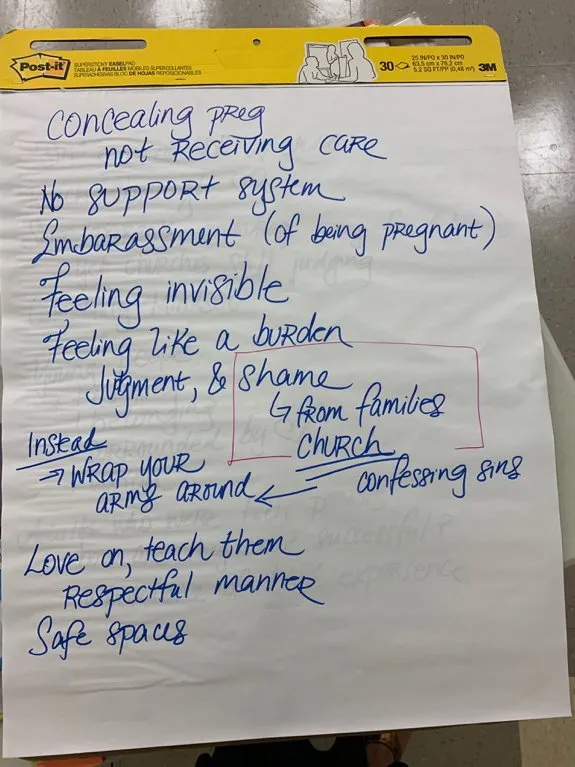
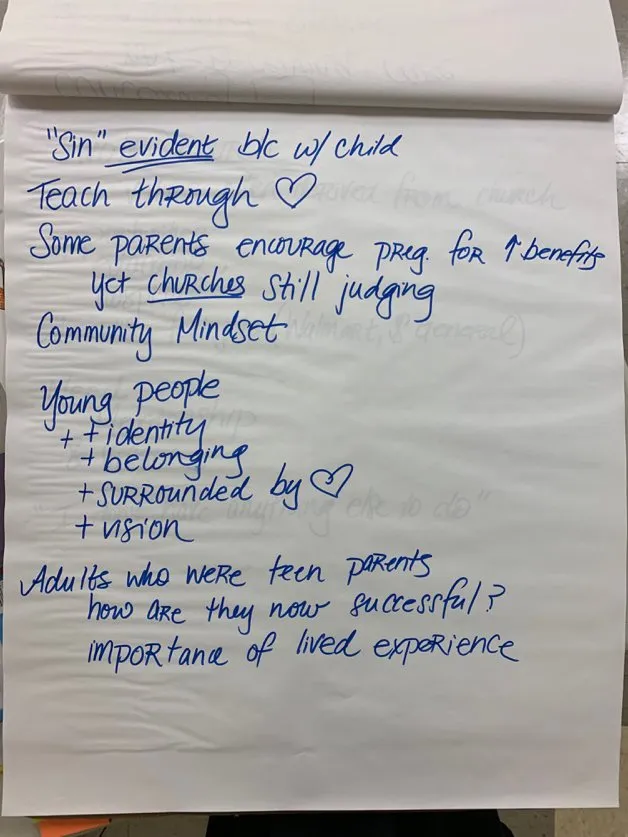
Involve Community: Involve existing systems such as churches & schools. Peer pressure of neighbors; grandparents are swayed by opinions of neighbors and church; sometimes kick out pregnant children rather than risk being shamed for continuing to support them living at the house
Social Emotional Learning: Youth lack vision because they do not have opportunities to imagine or create futures different than what they see around them. Social emotional learning should focus on self-esteem, vision, and agency. Shame also needs to be addressed. One participant spoke of being told “she let everyone down” when she became pregnant as a high school student. Others spoke of how the church shames girls who become pregnant, yet the boys who impregnate them are usually not identified nor publicly shamed.
Address Sexual Health: Low pregnancy rates – unsure if it has gone underground or is not happening; sexually transmitted infection rates still high; Some young mothers have sexual relations with men in order to be supplied with diapers and formula.
Incentives: People are used to incentives. Culture of “I don’t do anything unless I get paid for it.” There are differing views on entitlements and handouts. Gift cards are popular, and sometimes expected for participation. We recommend that Wellness Mentors are supported with stipends for their time and snacks for the group. If safe spaces are localized, there should not be transportation costs. Consider whether child care is necessary.
Width of Experiences: Disparities between racial groups; rural vs urban
Intergenerational Cycles: Some parents encourage their teenagers to have children, as more family members may mean more benefits from certain providers. Leaders recognized that this survival mode thinking perpetuated poverty and economic dependence, and was often due to the inability to envision any other future.
TICE Framework Relatable:
- Stress, Crisis, & Adversity
- Themes of safety, identity connection
Recommendations
Given GTP’s learning agenda, consultation meetings, and best practices, we recommend:
- Integrated work plan
- Facilitate broad community ownership
- Community Mapping exercise to determine location of Safe Spaces
- Determine Desired Reach: PPTs only? Number of PPTs, Wellness Mentors, Local Safe Spaces
- Focus on Doughtery, Sumter, and Randloph counties
- Deeper involvement with fewer PPTs (impact over numbers)
- “Near Peer” Wellness Mentors
- Support Wellness Mentors: (Stipends, Snacks, Transport)
- Determine appropriate evaluation measures
Year 1 extension: July through September 2021
- 4
Contextualization of TICE Framework
For Adolescent Health in SW Georgia (with input from ASU and/or key partners); includes further consultative meetings, community needs assessment, and case studies.
- 5
Social Media Campaign/Community Education Campaign
July, August, September
GTP hosts remote consultation sessions with 3 select Planning Council representatives from each county, forming a Leadership Committee, to design and launch a community education campaign supporting teen health and wellness
- 6
Community Champion Training – Part 1
Saturday, August 14 (proposed, in person)
“Strengthening Localized Supports for PPTs”
Identification of 3 Community Champions from each selected community. (See note below regarding preference for focusing on counties, instead of hubs)
Objectives:
- Overview of Trauma-Informed Change Making
- Community Ownership: Steps for Sustainability
- Intentional Design: Where are PPTs? Who should be Wellness Mentors?
- Action Plans, including community mapping and recruitment
- 7
Wellness Mentor Training
September 13–18, 2021 (proposed, in person)
“Implementing Safe Spaces and Supports for PPTs”
Initial training for approximately 40 Mentors/Team Leaders, preparing them to initiate localized Safe Spaces, identify targeted youth, and begin to facilitate first ½ of group workshops.
We highly recommend that this training take place in person. Dependent on who are selected as Wellness Mentors, it may not be possible to do a 5-day, in person training. Continuation of the intentional design process will determine best modality (# of days, hybrid, time of day, etc.). Alternatives include a live, in-person 2-day training with further modules conducted online. This may allow for greater participation; however, would also stretch the timeline into Year 2. As initially proposed, training will potentially utilize a hybrid training model, with trainers conducting remotely via Zoom, and participants attending in small pods of 8–10 people at community locations supported by a TICE Community Champion. This will allow for facilitated discussions, small group activities, and reflective learning, while following COVID safety protocols, and minimizing technology issues.
Content to include:
- Welcome & Overview
- Group Guidelines: Creating Safety
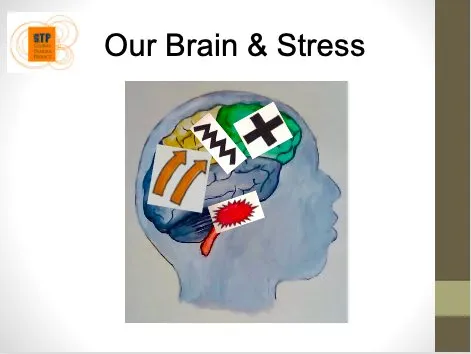
- Introduction to Personal Wellbeing: Compounded Stress, Biology, Trauma
- Brain Under Stress
- Resilience
- Facilitation Skills, Practice, Teachbacks, Feedback
- Action Planning
- 8
Establishment of Safe Space
September 20–30, 2021
Establishment of Localized Safe Spaces for targeted PPTs within selected counties.
Year 2: October 1, 2021 – June 30, 2022
- 1
TICE Youth Workshops
9/27/21 – 12/18/21 (Teen engagement)
(Wellness Mentors facilitate youth workshops for groups of 15 youth in local safe spaces. Topics to include wellbeing, stress, mental health, emotional regulation, identity, self-esteem, future visioning.)
- 2
TICE Training for Wellness Mentors & Team Leaders: Part 2
11/1/21 – 11/5/21
(Part 2 of TICE training for Mentors/Team Leaders, preparing for second ½ of group workshops held at Safe Spaces)
- 3
Formulation of Youth Action Councils & Youth Innovation Training
01/10/22 – 02/04/22 (teen engagement)
(Youth at Safe Spaces who have completed the TICE Wellness Sessions will be invited to form a Youth Action Council, supported by Safe Space Mentors and Team Leaders, with broader support from Planning Councils. GTP will conduct training on visioning, developing youth innovation, action plans, and launch of youth innovation with Action Councils.)
- 4
Youth Empowerment & Innovation Initiatives (Action Councils)
2/7/22 – 5/30/22 (teen engagement)
(Action Councils can apply for small grant funding through ASU/Stronger Together, to support their innovation projects. Action Councils will facilitate innovation activities, with support by Planning Councils, GTP, & ST team)
- 5
Impact Evaluation
9/1/21 – 6/30/22
(TBD if ASU/ST would like GTP to support additional impact assessment, including mental health and physiological measures)
Creating a network of trauma-informed Wellness Mentors provides much needed information, inspiration, guidance, and access to services for youth who otherwise would have remained on the fringes.
Community champions are empowered to understand the main concepts of trauma, identify how trauma has affected their own and youth’s lives, and directly reduce the negative effects, while increasing individual and community resilience. The implementation of community-wide, mental health initiatives has the potential to bolster youth well-being within the home, school, and community. It allows for an innovative approach to reduction in teen pregnancy and promotion of adolescent health. By focusing “upstream,” we are able to provide a network of support for youth as they develop a stronger sense of agency, vision, and community.
Stronger Together Activity Report
The original report, Global Trauma Project, July 2021 (PDF, 13 pages).